


Cardiopulmonary Resuscitation (CPR)
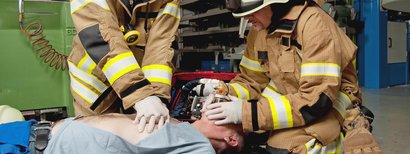
Cardiopulmonary resuscitation, or more commonly known as CPR, is a critical emergency procedure used when the heart stops beating. Knowing what CPR is, when to do CPR, and how this procedure can significantly increase a person’s chance of survival after cardiac arrest can make a life-changing difference. Following clear CPR instructions and acting quickly is vital, as every second matters. Just a few minutes without circulation can cause irreversible brain damage or death.
Effective CPR depends not only on strong, continuous compressions but also on proper ventilation techniques. Maintaining the correct CPR ratio of compressions to breaths—and adjusting the ventilation rate for adult CPR versus the ventilation rate for child resuscitation—ensures that oxygen levels remain adequate during resuscitation efforts.
Understanding the importance of both elements helps responders deliver high-quality care in life-threatening situations, improving outcomes and supporting the body’s critical functions during cardiac arrest.
What is CPR (Cardiopulmonary Resuscitation) and When to Do It?
Cardiopulmonary resuscitation (CPR) is an emergency lifesaving technique performed when the heart suddenly stops beating. CPR involves a combination of chest compressions and rescue breaths to manually preserve brain function and maintain circulation of oxygenated blood until a normal heart rhythm can be restored.
Knowing how to do CPR is just as important as knowing when to do CPR. First and foremost, if a person is unresponsive, not breathing, or only gasping, it should be started immediately. According to the American Heart Association1 and public health agencies such as NYC Health2, prompt action, guided by clear CPR instructions, can double or even triple a cardiac arrest victim’s chance of survival.
Examples of situations when CPR should be started include:
- A person suddenly collapses and becomes unresponsive
- No normal breathing or only occasional gasping sounds
- Victim of drowning who is unresponsive and not breathing
- Severe electrical shock causing unresponsiveness
- Drug overdose resulting in unconsciousness and lack of breathing
- Choking incidents where the person becomes unresponsive
Recognizing these emergencies and acting quickly is imperative. Starting CPR immediately can make the difference between life, severe brain injury, or death, especially in the critical first few minutes following cardiac arrest.
However, CPR is neither a disease nor a cure for the underlying cause of cardiac arrest; instead, it serves as a bridge to maintain vital functions while the reversible causes—known as the H’s and T’s—are identified and treated.
Chain of Survival
The Chain of Survival is a series of key actions designed to give individuals the best possible chance of surviving cardiac arrest. Each step must be performed quickly and effectively to support circulation, restore heart function, and minimize organ damage.
According to the American Heart Association, a strong Chain of Survival—beginning with early recognition and CPR—can significantly improve the outcome for victims of cardiac arrest.3
Key steps in the Chain of Survival include:
- Recognize cardiac arrest and contact EMS immediately
- Start early CPR with an emphasis on chest compressions
- Perform rapid defibrillation (using an AED to restore a normal heart rhythm)
- Provide effective advanced life support
- Deliver post-cardiac arrest care
How to Perform CPR: Instructions
According to official CPR instructions from the American Heart Association4, the basic steps include:
- Checking for responsiveness
- Calling for emergency help
- Beginning chest compressions at the center of the chest
- Delivering rescue breaths if trained to do so
High-quality CPR focuses on pushing hard and fast in the center of the chest while minimizing interruptions to compressions. The CPR ventilation rate is also of critical importance. In most cases, CPR ventilation is included, when possible, to ensure oxygen is reaching the lungs.
CPR on Adults
When CPR is required for adults, place both hands on the center of the chest and perform compressions at least 2 inches deep. If trained, give 2 rescue breaths after every 30 compressions. It’s important to avoid excessive ventilation, as studies show that hyperventilation during adult CPR can lower survival rates. Focus on high-quality compressions and controlled breaths to maximize blood flow and oxygen delivery.
CPR on a Child and an Infant
When performing CPR on a child (ages 1 to puberty), use one or two hands to compress the chest about 2 inches deep. For an infant (under 1 year old), use 2 fingers just below the nipple line to compress the chest about 1.5 inches deep. In both cases, follow cycles of 30 compressions and 2 rescue breaths.
For children, ensure each breath is slower and gentler than for adults, watching for chest rise without over-ventilating. For infants, give 2 small puffs of air into the mouth and nose, just enough to see the chest rise. Proper technique and ventilation are especially critical, as infants are highly sensitive to oxygen loss.5
What is the CPR Ratio?
The CPR ratio refers to the number of chest compressions followed by rescue breaths during cardiopulmonary resuscitation. It ensures that both circulation and ventilation are provided in the correct sequence to maximize survival during cardiac arrest.
CPR Ratio for Adults
- Single or multiple rescuers: 30 compressions to 2 breaths (30:2)
- Focus on hard, fast compressions at 100–120 per minute.
- Compress the chest at least 2 inches deep.
CPR Ratio for Children and Infants
- Single rescuer: 30 compressions to 2 breaths (30:2)
- Two or more rescuers: 15 compressions to 2 breaths (15:2)
- Compression depth: about 1.5-2 inches or one-third the chest depth.
What are the Recommendations for Ventilation during CPR?
While ventilation is a critical part of CPR, current guidelines only provide broad recommendations. The American Heart Association advises trained responders to deliver rescue breaths with chest compressions but does not specify whether manual methods, such as bag-valve-mask (BVM) ventilation, or mechanical ventilation should be used.
No particular ventilation mode is preferred during CPR, reflecting the limited evidence available. Studies by Ahamed et al.6 and Hernández-Tejedor et al.7 highlight that ventilation quality varies widely, regardless of the method.
As a result, responders are instructed to focus on visible chest rise and avoid hyperventilation, which can worsen outcomes during cardiac arrest.
Recommendations for Adults
Although evidence is limited, the American Heart Association offers general guidance for adult ventilation during CPR. The focus is on delivering oxygen effectively without causing hyperventilation, which can reduce survival rates.
Ventilation Rate
- Give one breath every 6 seconds (about 10 breaths per minute) if an advanced airway is in place.
- Without an advanced airway, provide two breaths after every 30 compressions, with minimal interruption.
Tidal Volume
- Each breath should cause visible chest rise without overinflating the lungs.
- Avoid excessive tidal volumes, as too much pressure can impair blood flow during compressions and worsen outcomes.
Ventilation Mode / Method
- No specific ventilation method—manual or mechanical—is recommended during CPR.
- Manual bag-valve-mask (BVM) ventilation is common but often inconsistent, as shown in studies by Ahamed et al. and Neth et al.8
- Mechanical ventilation may provide more consistent breaths, but no preferred device or mode is formally recommended.
Recommendations for Children and Infants
Ventilation during CPR for children and infants requires special attention to lung size and oxygen needs. Pediatric cardiac arrests often result from respiratory causes, making effective ventilation especially critical.
Ventilation Rate
- Deliver one breath every 2 to 3 seconds (about 20 to 30 breaths per minute) if an advanced airway is in place.
- Without an advanced airway:
- Single rescuer: Provide two breaths after every 30 compressions.
- Two rescuers: Provide two breaths after every 15 compressions.
Tidal Volume
- Deliver just enough air to cause visible chest rise.
- For infants, use small, gentle puffs of air to avoid lung injury or reduced blood flow.
- Avoid excessive force or volume during ventilation for all pediatric patients.
Ventilation Mode / Method
- No specific recommendation is made regarding manual versus mechanical ventilation during pediatric CPR.
- Manual BVM ventilation remains the most common approach, although consistency can vary.
- Whether manual or mechanical methods are used, the priority is to deliver controlled, effective breaths and prevent hyperventilation.
Ventilation Devices for CPR
Choosing the right ventilation method during CPR is critical for patient outcomes. Traditional BVMs are commonly used but come with significant challenges. Manual ventilation often results in inconsistent tidal volumes, variable ventilation rates, and a high risk of hypo- or hyperventilation—all of which can compromise circulation and reduce the chances of successful resuscitation. While BVMs are portable and inexpensive, they require significant skill to use effectively under stress.
Mechanical ventilation offers a more reliable alternative during CPR. Devices like portable ventilators are designed to deliver consistent, guideline-compliant breaths at the correct ventilation rate and volume, helping reduce the risk of human error. Although mechanical ventilators require initial investment and training, their ability to provide standardized support in critical situations outweighs these limitations.
MEDUMAT Easy CPR from WEINMANN combines portability, ease of use, and precise control, making it an ideal solution for emergency responders. It ensures controlled ventilation, protects against hyperventilation, and frees rescuers to focus on high-quality chest compressions and the underlying cause of cardiac arrest.
Furthermore, MEDUMAT Easy CPR fully supports the guideline-compliant process of CPR. With MEDUtrigger, one rescuer is able to provide consistent mask ventilation in 30:2 mode. After insertion of an advanced airway device, you can easily switch to continuous ventilation (10 bpm) with the push of a button and the device will fully take over ventilation.


1 American Heart Association. (2020). AHA Guidelines for CPR and Emergency Cardiovascular Care. Available at: https://cpr.heart.org/en/resources/what-is-cpr
2 NYC Health. CPR – Cardiopulmonary Resuscitation. Available at: https://www.nyc.gov/site/doh/health/health-topics/cpr.page
3 American Heart Association. (2020). AHA Guidelines for CPR and Emergency Cardiovascular Care. Available at: https://cpr.heart.org/en/resources/what-is-cpr
4 American Heart Association. (2020). AHA Guidelines for CPR and Emergency Cardiovascular Care. Available at: https://cpr.heart.org/en/resources/what-is-cpr
5 Mayo Clinic. First Aid: CPR Basics. Available at: https://www.mayoclinic.org/first-aid/first-aid-cpr/basics/art-20056600
6 Ahamed H. et al. (2023). Bag-Valve-Mask Ventilation and Survival from Out-of-Hospital Cardiac Arrest: A Multicenter Study.
7 Hernández-Tejedor A. et al. (2023). Ventilatory Improvement with Mechanical Ventilator Versus Bag in Non-Traumatic Out-of-Hospital Cardiac Arrest: SYMEVECA Study, Phase 1.
8 Neth M. et al. (2020). Ventilation in Simulated Out-of-Hospital Cardiac Arrest Resuscitation Rarely Meets Guidelines.
Other References:
1. Chauhan A. et al. (2023). Comparison of Hemodynamic Consequences of Hand Ventilation Versus Machine Ventilation for Transportation of Post-Operative Pediatric Cardiac Patients.
2. Aufderheide TP et al. (2004). Hyperventilation-Induced Hypotension During Cardiopulmonary Resuscitation.Circulation, 109(16): 1960–1965.