


Airway Management
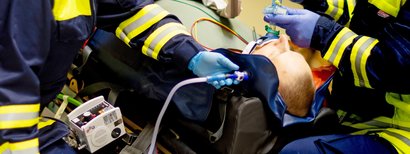
In emergency and prehospital medicine, airway management remains one of the most critical forms of intervention. Without a clear and secure airway, oxygenation, and ventilation are compromised, increasing the risk of hypoxia, organ failure, and death.
Selecting the appropriate method depends on several factors, including the patient’s condition, provider expertise, and logistical considerations such as transport time. Recent prehospital studies indicate that advanced airway techniques can enhance oxygenation and improve survival, particularly during prolonged transport. However, success rates and neurological outcomes vary depending on the device and technique used.
This article examines essential airway management strategies, the most commonly used devices, and how modern technologies are helping to improve patient safety and outcomes in emergency care.
What is Airway Management?
Airway management refers to the range of medical procedures and techniques aimed at ensuring an open and secure airway to facilitate adequate oxygenation and ventilation. In prehospital settings, this involves both basic airway management and advanced airway management, as well as invasive and non-invasive techniques.
Successful airway management is critical in emergency care to prevent hypoxia and other similar complications. The decision between basic and advanced techniques depends on the patient’s condition, provider expertise, and available airway management equipment. For instance, in pediatric airway management, first responders must consider anatomical differences and select appropriate airway management devices to ensure safety and efficacy.
Understanding the various types of airway devices and their applications enables EMS professionals to make informed decisions and improve patient outcomes in diverse emergency scenarios.
What is Basic Airway Management?
Basic airway management includes essential first-line techniques used to open and maintain a patient’s airway without the need for invasive airway management devices. These interventions form the foundation of non-invasive airway management and are used by EMS providers in a wide range of emergency situations.
Basic airway management measures are typically used with unconscious patients or those with compromised breathing and are especially valuable during initial assessment, CPR, and transport. While basic, they are crucial in preventing hypoxia and can often stabilize the airway until advanced airway management or mechanical ventilation is available.
Because they do not require direct access to the trachea, these interventions are classified as non-invasive airway management and are widely used in both adult and pediatric emergency care. Common techniques include:
- Head Tilt and Chin Lift
- Jaw Thrust
- Bag-Valve-Mask (BVM) Ventilation
- Back Blows and Abdominal Thrusts (Heimlich maneuver)
- Oropharyngeal (OPA) and Nasopharyngeal Airways (NPA)
These techniques are essential for maintaining oxygen flow until advanced care or transport becomes available.
What is Advanced Airway Management?
Advanced airway management refers to techniques that go beyond basic manual maneuvers and adjuncts, often requiring higher levels of training and more specialized equipment. These methods are used when basic techniques are insufficient, particularly in cases of respiratory failure, cardiac arrest, or prolonged transport. Common approaches include:
- Supraglottic airway devices (SGAs)
- Endotracheal intubation (ETI)
- Surgical airways, e.g. Tracheotomy
Although SGAs are technically non-invasive, both ETI and surgical airways are categorized as invasive airway management, as they involve direct access to the trachea. These procedures provide secure ventilation and protection against aspiration but carry higher risks and require significant expertise.
Prehospital studies have shown that advanced airway methods can improve oxygenation and return of spontaneous circulation (ROSC) in out-of-hospital cardiac arrest (OHCA), particularly during long transports. However, success and outcomes vary depending on the provider’s experience and the patient’s condition.
Advanced airway management techniques are used when basic methods are not sufficient to maintain airway patency or provide effective ventilation. These procedures often require specialized training and equipment and are commonly used in critical or prolonged emergency situations.
Key techniques include:
- Laryngal Tube (LT)
- Laryngeal Mask Airway (LMA)
- Endotracheal Intubation (ETI)
- Cricothyrotomy
- Tracheotomy
These advanced techniques are critical in managing compromised airways and improving patient safety during severe emergencies.
What is Pediatric Airway Management?
Pediatric airway management requires specialized knowledge due to anatomical and physiological differences in children. EMS providers must adapt both technique and equipment to ensure safe and effective care.
- Smaller airways and higher risk of obstruction
- Rapid onset of hypoxia
- Use of appropriately sized BVMs, airway adjuncts, and SGAs
- Gentle suctioning and careful positioning
One potentially life-threatening complication is laryngospasm, a reflexive closure of the vocal cords that can completely obstruct airflow. It may be triggered by airway manipulation, suctioning, or secretions, and requires immediate recognition and intervention.
In many pediatric OHCA cases, studies suggest that basic techniques such as BVM ventilation may be more favorable for neurologic outcomes compared to advanced airway placement. Nonetheless, advanced methods are sometimes necessary and must be applied with caution.
What are the Indications for Airway Management?
Effective airway management is critical in emergency and prehospital care to ensure adequate oxygenation and ventilation. The decision to initiate airway interventions—ranging from basic maneuvers to advanced techniques—depends on specific clinical indicators. Recognizing these signs promptly is essential to prevent hypoxia and its associated complications. According to established guidelines and studies, the primary indications for airway management include:
- Inability to maintain or protect the airway
- Respiratory failure
- Airway obstruction
- Anticipated clinical deterioration
- Cardiac or respiratory arrest
These indications are supported by evidence-based guidelines and literature, which emphasize the importance of timely and appropriate airway interventions in critical care situations.
What are the Contraindications for Airway Management?
While airway management is often life-saving, certain techniques carry risks and may be inappropriate or even harmful under specific circumstances. Identifying contraindications is essential to avoid complications or serious injuries.
Contraindications may vary depending on whether basic, advanced, non-invasive, or invasive airway management is being considered. According to clinical guidelines and literature, key contraindications include:
- Suspected cervical spine injury: avoid the head-tilt–chin-lift technique
- Facial trauma or airway obstruction: avoid BVM or supraglottic devices
- Trismus or restricted mouth opening: avoid oropharyngeal airways or laryngoscopy
- Conscious or semiconscious patient with intact gag reflex: avoid oropharyngeal airway devices
- Anatomical distortion or upper airway mass: avoid supraglottic or invasive airways techniques
- Lack of provider training or equipment availability
In prehospital care, the decision to proceed with any airway intervention must always weigh urgency against potential harm.
What are the Types of Airway Devices?
Basic Airway Devices
- Oropharyngeal airway (OPA)
- Nasopharyngeal airway (NPA)
- Bag-valve-mask (BVM)
Advanced Airway Devices
- Laryngeal mask airway (LMA)
- I-gel Laryngal mask airway
- Laryngeal tube (LT)
- Endotracheal tube (ETT)
- Cricothyrotomy
- Tracheotomy
What Are the Complications of Intubation?
While endotracheal intubation (ETI) is a critical component of advanced airway management, it carries risks, particularly in prehospital settings. Complications can arise from both the procedure itself and patient-specific factors. Common complications include:
- Hypoxia
- Aspiration
- Esophageal intubation
- Airway trauma
- Laryngospasm or bronchospasm
A prospective multicenter study identified factors increasing the risk of intubation-related complications, including higher Cormack-Lehane grades (3 or 4), obesity (BMI >30), difficult intubation (more than two attempts), and the need for multiple operators.1
These findings underscore the importance of thorough assessment and preparation before attempting intubation, as well as the need for ongoing training and adherence to established airway management protocols.
Airway Management with WEINMANN
MEDUMAT Easy CPR emergency ventilator is designed for use with all types of airway devices—whether basic, supraglottic, or advanced—providing consistent ventilation support throughout Rapid Sequence Intubation (RSI) or CPR.
With MEDUtrigger, a singleprovider is able to deliver consistent mask ventilation by the push of a button. After insertion of an advanced you can easily switch to continuous ventilation with predefined settings, and the device fully takes over ventilation.

1 Deutsche Gesellschaft für Anästhesiologie und Intensivmedizin (DGAI). S1-Leitlinie Atemwegsmanagement 2023. Available at: https://register.awmf.org/assets/guidelines/001-028l_S1_Atemwegsmanagement_2023-09.pdf
2 Song KJ, Shin SD, Ro YS, et al. Association between prehospital airway type and oxygenation and ventilation in out-of-hospital cardiac arrest. Am J Emerg Med. 2023. Available at: https://pubmed.ncbi.nlm.nih.gov/36580697/
3 Jung YH, Shin SD, Song KJ, et al. Association of prehospital airway management technique with survival outcomes of out-of-hospital cardiac arrest patients. PLOS ONE. 2022. Available at: https://journals.plos.org/plosone/article?id=10.1371/journal.pone.0269599
4 Wang HE, Schmicker RH, Daya MR, et al. Comparing effectiveness of initial airway interventions for out-of-hospital cardiac arrest: a systematic review and network meta-analysis. Crit Care. 2020. Available at: https://pubmed.ncbi.nlm.nih.gov/31983572/
5 StatPearls. Airway Management. National Library of Medicine; last updated 2023. Available at: https://www.ncbi.nlm.nih.gov/books/NBK470403/
6 Srivastava U, Dali JS, Rizvi AA, et al. Complications during airway management: A prospective observational study. Indian J Anaesth. 2023. Available at: https://pubmed.ncbi.nlm.nih.gov/36847300/2