


Bag-Valve-Mask Ventilation (BVM)
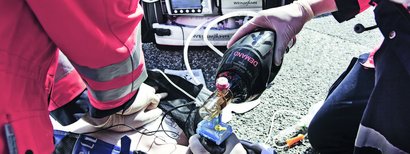
Effective ventilation is vital in emergency medical services (EMS), especially in situations where the patient is unconscious or can no longer breathe on their own, such as respiratory failure, cardiac arrest, or trauma.
Bag-valve-mask ventilation (BVM), commonly referred to as bag and mask ventilation, is a fundamental practice in prehospital respiratory care. It is portable, easy to use, and essential for EMS providers. However, despite its widespread use, manual bag and mask ventilation has often proved difficult to perform consistently and can lead to complications such as hypoventilation, hyperventilation, or gastric insufflation.
Although BVM is a practice all EMS providers should be proficient at, research by the National Association of EMS Physicians (NAEMSP) emphasizes that while bag and mask ventilation remains important, its limitations must be addressed. Their position statement supports the use of mechanical ventilation technologies in prehospital settings to provide more reliable and precise respiratory support.1
This article examines the essentials of bag-valve-mask ventilation, common challenges faced in the field, and the increasing role of mechanical ventilation in enhancing patient care during emergencies.
What is Bag-Valve-Mask Ventilation?
Bag-valve-mask ventilation is a critical technique used in emergency care to manually deliver positive-pressure breaths to patients who are apneic or experiencing insufficient respiration.
The process involves using a self-inflating bag attached to a face mask, which is squeezed in order to allow first responders to manually force air into the lungs. Effective implementation of the bag-valve-mask ventilation technique requires maintaining an open airway and achieving a tight mask seal, often assisted by maneuvers such as the jaw thrust or head-tilt chin lift. In emergency and prehospital settings, bag and mask ventilation remains a key skill for quickly stabilizing patients before advanced airway interventions can be initiated.
Performing BVM ventilation may sound simple, however, achieving the appropriate bag-valve-mask ventilation rate and volume is crucial to prevent further complications such as hypo- or hyperventilation, gastric insufflation, or impaired cardiac output.
What Are the Indications for BVM Ventilation?
In emergency and prehospital care, the use of a bag-mask device for positive pressure ventilation is a vital intervention for patients experiencing respiratory compromise. The BVM technique is indicated when immediate airway management and oxygenation are needed before advanced interventions.
According to clinical best practices, some indications for BVM ventilation include:
The proper use of bag-valve-mask ventilation is imperative to maintain effective oxygenation while minimizing the risk of inducing conditions such as gastric insufflation or barotrauma. First responders must be trained to deliver appropriate ventilation volumes and rates to ensure patient safety.2
- Apnea (absence of spontaneous breathing)
- Hypoxic respiratory failure (inadequate oxygenation)
- Hypercapnic respiratory failure (inadequate carbon dioxide removal)
- Decreased level of consciousness with loss of airway protection
- Ventilatory support during anesthesia induction or rapid sequence intubation
The proper use of bag-valve-mask ventilation is imperative to maintain effective oxygenation while minimizing the risk of inducing conditions such as gastric insufflation or barotrauma. First responders must be trained to deliver appropriate ventilation volumes and rates to ensure patient safety.2
What is a Contraindication of Bag-Valve-Mask Ventilation?
A contraindication of bag-valve-mask ventilation is any condition where using a bag-mask device could be ineffective or even harmful to the patient. In other words, it’s a situation where BVM should either be avoided altogether or only used with extreme caution, as it could worsen the patient’s condition or delay more appropriate airway management.
Although bag-valve-mask ventilation is one of the most important methods of emergency airway management, there are specific situations where its use may be limited or inappropriate. Therefore, understanding when BVM should be performed and recognizing when to use alternative methods is critical for ensuring patient safety.
Based on recommendations from the NAEMSP Position Statement and clinical guidelines from the National Institutes of Health, bag mask ventilation should be used with caution or avoided in the following cases:
- Complete upper airway obstruction
- Severe facial trauma preventing an effective mask seal
- High risk of aspiration due to unprotected airway
- Active vomiting or regurgitation
In these scenarios, alternative airway techniques such as supraglottic airway devices or immediate endotracheal intubation may be more appropriate to ensure patient safety and ventilation effectiveness.3
Technique: How to Perform Bag-Valve-Mask Ventilation
Performing effective and safe bag-valve-mask ventilation requires both skill and coordination.
The EMS provider should first position the patient’s head properly, using a head-tilt chin-lift or jaw thrust if a cervical spine injury is suspected.
The mask must be placed securely over the nose and mouth, creating an airtight seal using the “E-C clamp” technique. The E-C clamp technique is a method used to form a “C” shape with the thumb and index finger around the mask while the remaining fingers lift the jaw.
Once the seal is established, the EMS provider can then slowly and steadily squeeze the bag, delivering breaths of approximately one second per breath. When providing breaths with a BVM, it’s important to ensure visible chest rise without overinflating the lungs.
Continuous reassessment of visible chest rise and airway patency is critical throughout the ventilation process.
What Is the Correct Ventilation Rate for a Bag-Valve-Mask Ventilation?
Maintaining the correct ventilation rate during bag-valve-mask ventilation is critical to avoid complications such as hypoventilation, hyperventilation, or gastric insufflation.
According to the American Heart Association 2020 Guidelines, the recommended bag-valve-mask ventilation rate for adult patients during cardiac arrest is one breath every 6 seconds, or approximately 10 breaths per minute. Each breath should be delivered over a one second period with enough volume to produce visible chest rise without causing excessive airway pressure. In non-cardiac arrest situations, ventilatory support should be tailored to achieve normal ventilation rates appropriate for the patient’s age and clinical condition.4
Why is Bag-Valve-Mask Ventilation difficult?
Bag-valve-mask ventilation remains a vital airway management technique but is often difficult to perform correctly. Achieving a tight mask seal typically requires 2 providers, and manual squeezing of the bag can lead to inconsistent tidal volumes and ventilation rates.
Studies show that during CPR, only 3 out of 106 cases met recommended ventilation guidelines.5 Furthermore, the American Heart Association warns that unintentional hyperventilation with BVM can reduce coronary perfusion and worsen outcomes.6
Clinical findings from the National Institute of Health highlight how the lack of real-time feedback during manual ventilation increases the risk of hypoventilation or gastric insufflation, emphasizing the need for more controlled alternatives.
On the other hand, mechanical ventilators already provide a set tidal volume, respiratory rate, and maximum airway pressure, allowing providers to focus on other tasks during patient care.
Alternatives to a BVM?
While mastering the BVM ventilation technique is essential in emergency care at least as a back-up solution, there are mechanical alternatives, as opposed to manual bag-valve-mask ventilation, that offer greater consistency and safety.
To address challenges such as maintaining an adequate mask seal, the following alternatives are commonly used:
- Supraglottic airway devices
- Endotracheal intubation for definitive airway control
To deliver an appropriate ventilation rate and volume while maintaining a set maximum airway pressure, portable mechanical ventilators have proven to be a particularly reliable, compact, and user-friendly solution.
Compact devices, such as WEINMANN’s MEDUMAT Easy CPR ventilator, are specifically designed for prehospital and emergency use, offering automated ventilation with set tidal volumes and rates.
The MEDUMAT Easy CPR ventilator helps first responders ensure consistent ventilation even under stress, thereby minimizing the errors often seen with manual bag and mask ventilation. Utilizing mechanical support not only improves ventilation efficiency but also frees up personnel to focus on other critical aspects of patient care.
MEDUMAT Easy CPR Emergency Ventilator
Mechanical ventilation ensures controlled, consistent breathing support during emergency and prehospital care. Unlike manual bag-valve-mask ventilation, mechanical ventilators precisely regulate tidal volume, respiratory rate, and airway pressure, reducing the risk of complications.
As a practical alternative to traditional BVM techniques, WEINMANN Emergency offers the MEDUtrigger—a handheld device that enables manual ventilation through the mechanical ventilator itself. The MEDUtrigger allows medical providers to deliver breaths manually while still benefiting from the ventilator’s real-time monitoring and pressure regulation. This innovation maintains the simplicity of the bag-mask ventilation technique while reducing variability and improving ventilation safety.


1 National Association of EMS Physicians. Prehospital Mechanical Ventilation: An NAEMSP Position Statement and Resource Document. Available at: https://t36684991.p.clickup-attachments.com/t36684991/d1f79a72-3af7-49bc-88a0-881c9305cc2a/Prehospital%20Mechanical%20Ventilation%20An%20NAEMSP%20Position%20Statement%20and%20Resource%20Document%20(1).pdf
2 National Center for Biotechnology Information (NCBI). Clinical Guidelines: Bag Valve Mask Ventilation. Available at: https://www.ncbi.nlm.nih.gov/books/NBK441924/
3 National Association of EMS Physicians. Prehospital Mechanical Ventilation: An NAEMSP Position Statement and Resource Document. 2024. Available at: https://t36684991.p.clickup-attachments.com/t36684991/d1f79a72-3af7-49bc-88a0-881c9305cc2a/Prehospital%20Mechanical%20Ventilation%20An%20NAEMSP%20Position%20Statement%20and%20Resource%20Document%20(1).pdf
4 American Heart Association. 2020 American Heart Association Guidelines for CPR and Emergency Cardiovascular Care. Available at: https://www.ahajournals.org/doi/full/10.1161/CIRCULATIONAHA.120.047463
5 Neth M et al (2020): Ventilation in Simulated Out-of-Hospital Cardiac Arrest Resuscitation Rarely Meets Guidelines
6 American Heart Association. 2020 American Heart Association Guidelines for CPR and Emergency Cardiovascular Care. Available at: https://www.ahajournals.org/doi/full/10.1161/CIRCULATIONAHA.120.047463